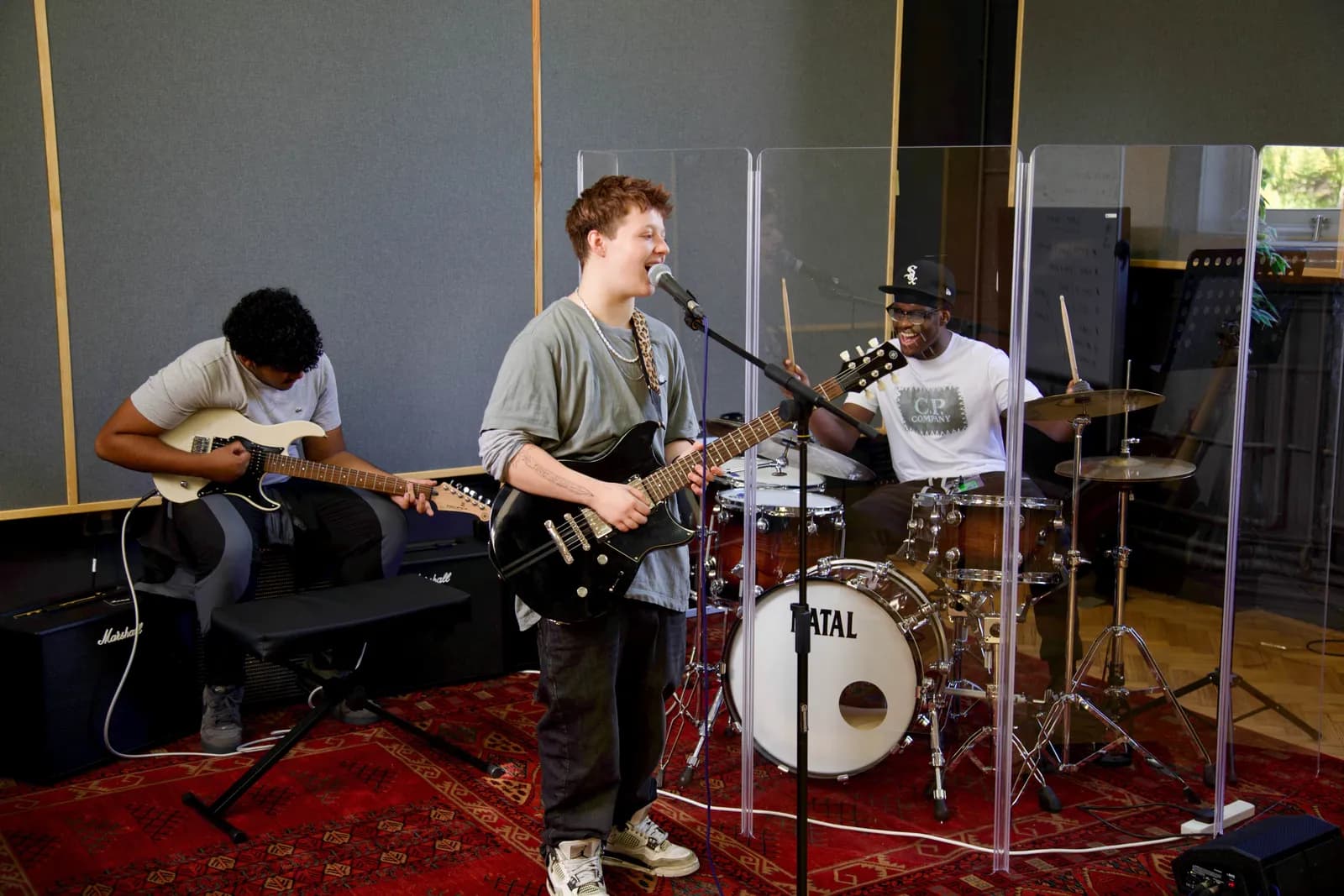
The new college is SupaJam's largest and best-equipped to date, reflecting the increasing demand for specialist post-16 education that combines academic learning with creative, industry-focused opportunities.
It joins existing SupaJam campuses in Swanley, Canterbury, Brighton and Wandsworth, all supporting 16 - 25-year-olds that have Education, Health and Care Plans (EHCPs), united by a shared passion for music and the wider creative industries.
Founders' Vision
Nick Stillwell, founder and joint CEO, said:
We are thrilled to open SupaJam’s fifth college in Earl’s Court, giving more young people in London access to our specialist educational curriculum, support and services. We believe that learning through music and first-hand experiences can build confidence, engagement and skills that benefit students throughout their lives.
Traditional education often focuses on what students can’t do, but at SupaJam, we focus on what they can do. SupaJam isn’t just about teaching; it’s about giving young people the confidence and opportunity to strive and thrive.
David Court, founder and joint CEO, added:
When Nick and I started SupaJam in a pub basement in Tunbridge Wells with just seven students, we never imagined that 13 years later we would be supporting more than 250 young people. We know from our own experiences how difficult it can be to find your place in traditional education, so creating an environment where young people feel understood, valued and able to discover what they are capable of has always been at the heart of what we do.
With backgrounds in film and TV, lifelong friends David Court and Nick Stillwell left their jobs after having a shared ‘lightbulb’ moment to help young people struggling in mainstream education, as they themselves had done, both leaving school with no qualifications.
They launched SupaJam in 2013 as a philanthropic endeavour. Today, SupaJam not only supports more than 250 students across five colleges, it also employs a workforce of 120 staff, with funding from the Department for Education and 13 local authorities.
Facilities and Courses
Purpose-built across three floors, the Earl’s Court college features industry-standard facilities including recording studios, Apple Logic Pro suites, podcast and radio facilities, a soundproofed rehearsal room, carefully designed teaching spaces, communal areas including a common room with kitchen, and a large outdoor courtyard for students to enjoy.
RSL Creative Industries Diplomas at Levels 1, 2 and 3 will be taught, with these modular qualifications including music performance, music production, songwriting, event management, marketing, careers advice and entrepreneurship.
English and Maths Functional Skills, from entry level through to GCSE, will be available, as well as SupaJam’s bespoke ‘Preparation for Adulthood’, helping students develop the skills and confidence they need for life beyond education.
Work Experience and Students
Regular trips to music festivals, gigs and concerts, musical theatre and other practical areas of the music industry, alongside numerous internal and external work experience opportunities. Recent student placements have been secured with The Great Escape festival and Festival Republic, with an ongoing partnership with d&b solutions.
SupaJam students have a variety of backgrounds and needs, including neurodivergent conditions such as autism and ADHD, as well as those who have experienced trauma, PTSD and other social and educational challenges.
Re-engaging young people who have struggled in mainstream education, while recognising their individual strengths and passion for music, has been central to SupaJam’s success. More than 70% of leavers go on to university.
SEND Provision in Context
The expansion comes at a time when the UK’s SEND system is under intense scrutiny, with mounting pressure on specialist provision, increasing waiting lists and growing concern among families about the lack of suitable educational placements available across the UK.
It also follows the Government’s recent white paper, Every Child Achieving and Thriving, which sets out plans for a more inclusive education system, earlier support for children with SEND and improved opportunities for young people to develop the skills they need to succeed beyond the classroom.
While the reforms aim to enable more children and young people to thrive in mainstream education where appropriate, they also recognise that specialist providers such as SupaJam continue to play a vital role for young people whose needs cannot be fully met in mainstream settings.